Embedded Android Developer Toolkit on Toradex Verdin AM62P and Dahlia Carrier Board
Introduction
Traditional embedded development is often difficult to learn because it requires specialized knowledge of hardware at a foundational level. This setup tends to favor engineers who focus on the overall system rather than just software. When discussing embedded systems, the primary concern is often the low-level steps required to boot and operate the system. While this is certainly critical, the most crucial part of the build—especially for interactive systems like kiosks—is the application layer.
What truly matters to project decision-makers and end-users is what happens at the application level. This is the software that interacts with the user and performs the primary tasks the product was designed for. Unfortunately, this layer often receives insufficient attention during the hardware selection process.
The Kynetics Embedded Android Developer Toolkit (EADT) is a game-changer, transforming the complexities of Android embedded systems into an accessible and powerful development environment for any Android mobile software engineer.
EADT is more than just an operating system; it is a comprehensive, full software stack that is easy to install and meticulously engineered to empower development using the fully enabled hardware capabilities of your target board.
The EADT stack consists of:
- An Embedded Android Operating System optimized for the target hardware.
- An Embedded SDK to facilitate the development of embedded Android applications.
- OTA (Over-the-Air) software update capabilities.
Embedded Android for the Verdin AM62P
Kynetics supports the Toradex Verdin AM62P and Dahlia carrier board with the Embedded Android Developer Toolkit, a software stack designed to accelerate the development of your embedded Android proof of concept.
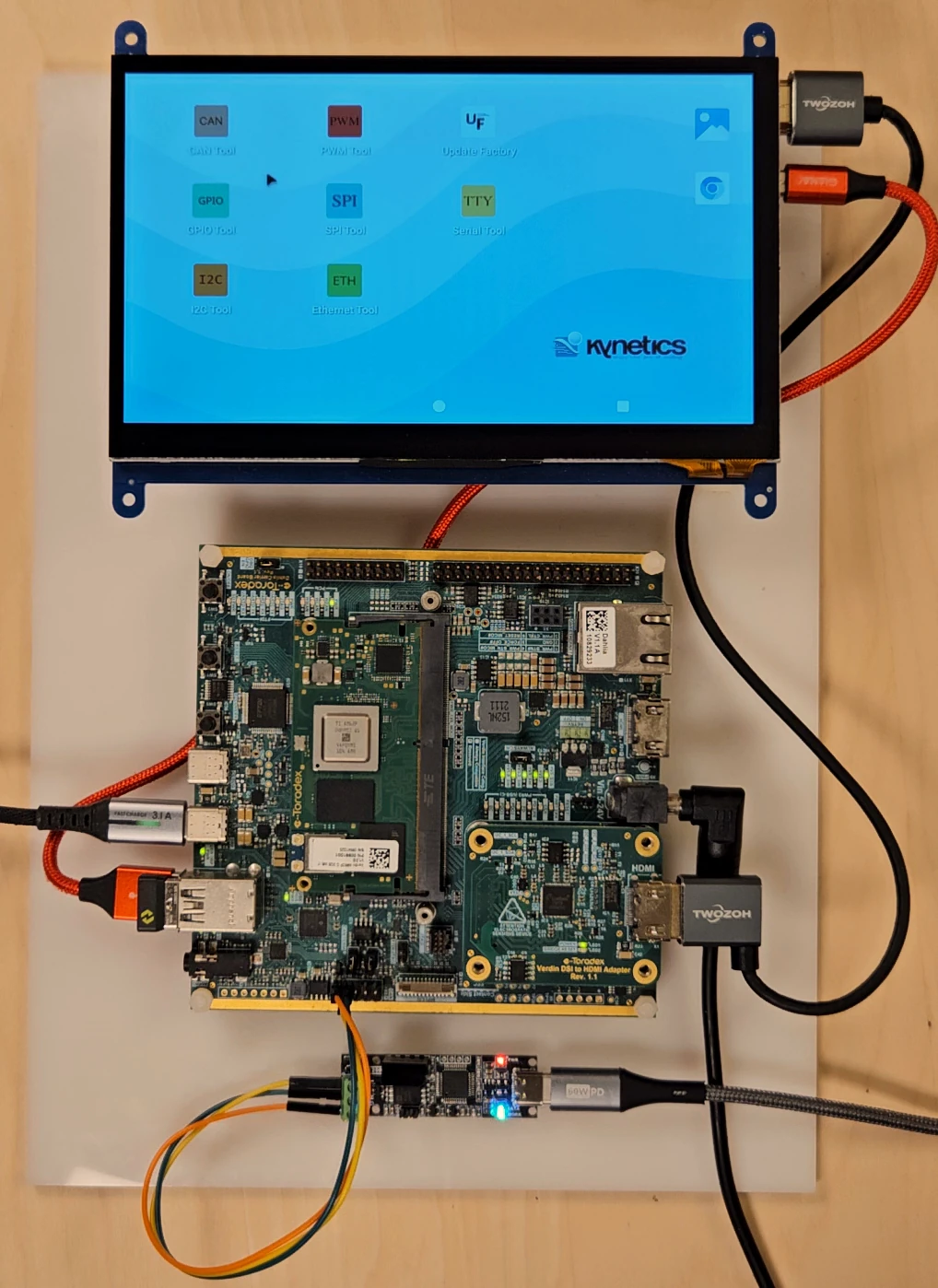
Fig 1. EADT on Verdin AM62P. EADT features CAN bus API to communicate to any testing device
This Embedded Android Developer Toolkit is specifically configured for the following hardware combination:
- SoM: Verdin AM62P 1.1A 2GB Wi-Fi and Bluetooth
- Carrier Board: Dahlia 1.1C PN 01551102
EADT is the fastest way to prototype your Embedded Android applications on target hardware while leveraging the full benefits of the Android ecosystem.
Texas Instrument AM62P SoC and the Verdin System on a Module
The Verdin AM62P System on Module (SoM) is an extension of the Verdin AM62 family, built specifically for high-performance embedded 3D display applications. It delivers up to 50 GFLOPS of graphical performance and features scalable Arm Cortex-A53 performance. Designed for various verticals—including industrial automation, medical, and transportation—the AM62P supports multi-screen high-definition displays and 4K video acceleration.
Performance Comparison
To understand the scale of this performance, it is helpful to compare the AM62P against other modules in the Verdin family. The AM62P offers the highest GPU performance among lower-cost Verdin SoMs, significantly outperforming the standard AM62 and the i.MX 8M Plus.
| Module | GPU Performance |
|---|---|
| Verdin AM62P | 50 GFLOPS |
| Verdin i.MX 8M Plus | 16 GFLOPS |
| Verdin AM62 | 8 GFLOPS |
| Verdin i.MX 8M Mini | 8 GFLOPS |
This level of performance—roughly 3x that of the i.MX 8M Plus and 6x that of the standard AM62—makes the Verdin AM62P particularly well-suited for industries requiring complex visualizations.
Key Graphical Features
Beyond raw speed, the Verdin AM62P architecture supports several advanced features designed to drive rich Human-Machine Interfaces (HMIs):
- 3D and 2D Acceleration: The module includes dedicated hardware acceleration for both 3D and 2D graphics.
- Video Acceleration: It features a Video Processing Unit (VPU) capable of 4K video acceleration, supporting H.264 and H.265 decoding at 4K resolution (30fps).
- Multi-Screen Support: The hardware features a triple display controller capable of driving up to three independent displays with resolutions up to 3840x1080 at 60fps.
- Display Interfaces: When used with the Dahlia carrier board, it supports MIPI DSI (Quad Lane), Dual-Channel LVDS, and HDMI (via a DSI to HDMI adapter).
Developing a complex OS like Android on new hardware is often a time-consuming hurdle. EADT addresses this by providing a pre-optimized, ready-to-deploy Android stack. Developers can immediately focus on the application layer without needing to act as systems engineers to resolve fundamental hardware integration issues.
Take Control of Your Hardware with the Embedded Android Developer Toolkit
The Embedded Android Developer Toolkit for the Verdin AM62P (Android 15) comes with a range of supported features, meticulously mapped to the Dahlia carrier board interfaces:
- UART Console: 1x UART port
- Debugging: 1x serial console, 1x ADB port
- GPIO: 4x User GPIOs accessible
- PWM: 2x PWM
- Industrial Interfaces: 1x I2C, 1x SPI, 1x CAN
- Connectivity: Wi-Fi & Bluetooth (MAYA-W260 module), Ethernet, 2x USB host
- Multimedia: HDMI Display, Audio (3.5mm jack), Hardware Video Acceleration (H.264)
Default Hardware Configuration
| I/O and Interfaces | Board Interfaces | Supported |
|---|---|---|
| UART | UART1 (X20:12,13) | Yes |
| Serial Console | UART3 (USB-C Debug port) | Yes |
| ADB (Android Debug) | USB1 (USB-C DRP port) | Yes |
| GPIOs | GPIO1-4 (X20:27,28,29,30) | Yes |
| PWM | PWM1 (X20:15) | Yes |
| SPI | SPI1 (X20:22,23,24,25) | Yes |
| I2C | I2C1 (X20:6,7) | Yes |
| HDMI | Generic Display 1080p | Yes |
| MIPI DSI | Riverdi Display | Upon request |
| CAN | CAN1 (X2) | Yes |
| USB (host) | USB2 (X4 top & bottom) | Yes |
| Wi-Fi / Bluetooth | On SoC | Yes |
| Ethernet | X4 RJ45 | Yes |
| Audio | 3.5mm Jack | Yes |
Table 1. EADT and Verdin AM62P default available interfaces.
Embedded Development Made Easy with the Android Embedded SDK
The standard Android SDK features hardware abstraction for mobile devices but often lacks support for critical embedded I/O controls and bus management. To overcome these limitations, the EADT includes the Kynetics Embedded Android SDK.
This SDK allows developers to control hardware directly from their Android application code, bridging the gap between high-level logic and low-level hardware functionalities.
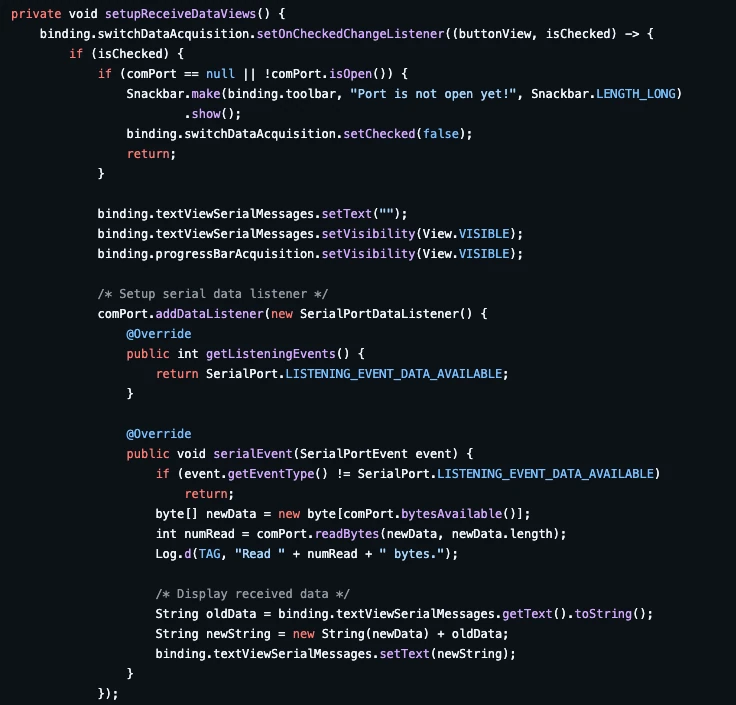
Fig 2. Example of Embedded SDK serial port management code
The Embedded Android SDK provides programmatic support for:
- GPIO, PWM, I2C, SPI
- Serial RS-232/485
- Ethernet and CAN
I/O and Interface Testing Tools
EADT includes a suite of testing tools to easily verify board I/O and interfaces such as GPIO, SPI, I2C, Serial ports, Ethernet, and PWM.
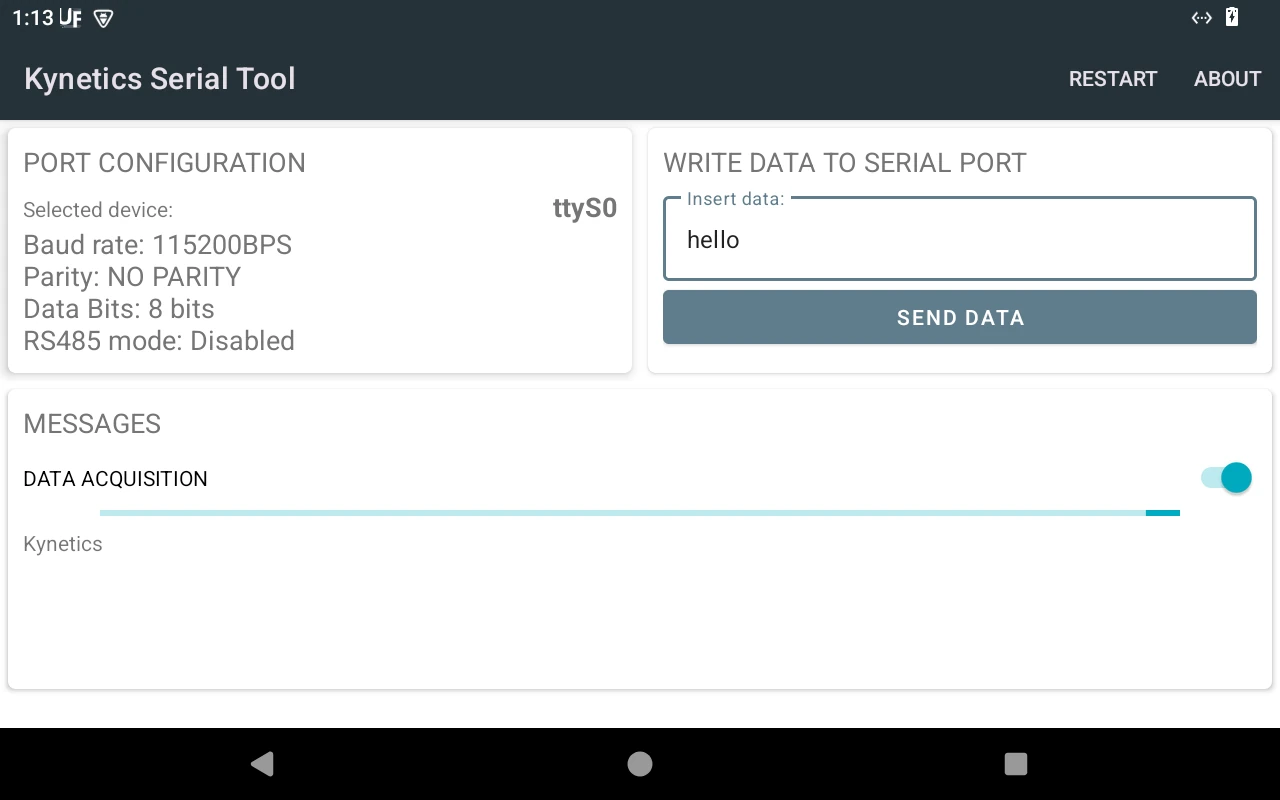
Fig 3. Serial Tool to test easily data sent and received over serial port
Over-the-Air (OTA) Support
EADT is OTA-ready. Update Factory enables EADT to receive custom OS updates, security patches, and remote application deployments. This feature is vital for streamlining iterations and reducing development cycles.
Update Factory Introductory Video
NOTE: Customizations for additional functionalities can be requested via premium support and delivered via OTA for faster testing.
Contact us
Kynetics is an Embedded Android IoT solution provider, with more than 15 years of expertise in Android for embedded systems. We provide professional tools and services to customers that use, or are looking to, Android in their products and require a proved partner from development to production stages.
For more information about license and features for the Embedded Android Developer Toolkit and our premium support:
For projects requiring specific security postures or production-ready deployments, Kynetics in addition offers custom Android OS builds that target your specific production hardware suporting the full chain of trust to ensure consistency security control. Contact us for detailed informaiton about our Android product development pipeline.
© 2026 all rights reserved.
Kynetics Inc. Santa Clara, California.
Enjoy the Art of Coding™ and Update Factory™ are registered Trademarks.